Sunday, February 24, 2013

21/02/2013

Lesson 6 - Gospels


What are the Gospels?

At first glance, the New Testament Gospels seem strange and difficult. Each tells the story of Jesus’ life, but only half of each Gospel is narrative in form. The rest of the material is what we might call “discourse” — speeches, parables, theological dialogues and debates, satire, and proverbs


What are they about?

A gospel is an account that describes the life of Jesus. The most widely known examples are the four canonical gospels of Matthew, Mark, Luke, and John, but the term is also used to refer to the apocryphal gospels, the non-canonical gospels, the Jewish-Christian gospels and the Gnosti Gospels


Who wrote them?

Matthew, Mark, Luke, and John.


3 Stories in the Gospel

- Healer of the Sick

- Jesus and the Sick

- Blind man Cured


21/02/2013

Lesson 5


What is a Proverb? List one Bible Example:
A man reaps what he sows. (Galatians 6:7)
This famous proverb fulfills the classic definition of an aphorism — it is a concise, memorable statement of truth. It is one of many proverbs you will discover in the Bible. In fact, the Bible may be the most aphoristic book in the world. Proverbs are embedded within its narratives and poems, and much of the New Testament is inherently proverbial. And if that isn’t enough, the Bible has the wisdom literature of Ecclesiastes and Proverbs.

What is a satire? List one Bible Example:
Where can we find satire in the Bible? Practically everywhere. To get a feel for the many forms in which biblical satire appears, you may want to peruse some of these examples

What are letters? What do they consist of?
Letters resemble the Greek and Roman letters of the ancient world. To our modern eyes, they look like no correspondence we have ever seen.
- Name one person that wrote letters to deliver a message in the bible:
Paul is responding to the heresy of Gnosticism, which had taken root in the church at Colossae. Adherents of Gnosticism claimed to have superior insight into the mysteries of religion beyond ordinary Christian belief.

21/02/2013

Lesson Four


How much of the Bible is written in Poetry?

Roughly one-third of the Bible is written in poetic form.

What are the main poetic ingredients? Include a brief description of each one?

  • Imagery.
    The use of words to paint pictures, evoking a concrete sensory experience of people, places, and things: “He makes me lie down in green pastures” (Psalm 23:1).
    • Simile.
      A comparison between two things that uses “like” or “as” — A is like B: “They are like trees planted by streams of water” (Psalm 1:3).
    • Metaphor.
      A comparison between two things that forgoes “like” or “as” to say that A is B: “The Lord is my shepherd” (Psalm 23:1).
    • Apostrophe.
      Addressing someone absent as though the person (or people) were present: “Depart from me, all you workers of evil” (Psalm 6:8).
    • Personification.
      Endowing a non-human subject with human attributes or actions: “Let the hills sing together for joy” (Psalm 98:8).
    • Hyperbole.
      Conscious exaggeration for emotional effect: “By my God I can leap over a wall” (Psalm 18:29).
    Read Psalm 23, describe the scene?
    Green pastures, still waters, dark valley, a shepherd’s rod and staff. The images are concrete, specific, drawn from nature and everyday life. Psalm 23 is built around the controlling metaphor of a shepherd herding his sheep to safety.
    What is the difference between Synonymous Parallelism & Antithetic Parallelism
    Synonymous Parallelism
    • Lines A and B say the same thing in similar grammatical form:
    Therefore the wicked will not stand in the judgment,
    Nor sinners in the congregation of the righteous. (Psalm 1:5)

    Antithetic Parallelism
    • Lines A and B say the same thing in contrasting ways:
    For the Lord watches over the way of the righteous,
    But the way of the wicked will perish. (Psalm 1:6)
  • 21/02/2013

    Lesson Three


    Why does the Bible have stories about Heroes?

    As a human race, we demand images of greatness. Heroes satisfy that demand. But heroes do not simply reflect our values and beliefs; they also reconcile us to human failings and limitations.

    What is an epic story? What are two epic stories in the Bible?

    While an epic is built around a hero who performs a great feat — a Moses or David — it is really the panoramic story of a nation. In the Bible’s epics, the hero’s journey is intertwined with the destiny of the nation as a whole, its conflicts, wars, and dominion. Events occur on a cosmic stage that is alive with supernatural events. Unlike a typical hero story, the scope is enormous.
    There are two unmistakable epics in the Bible — the Exodus from Egypt and the story of David. The following readings encapsulate the cores of both epics (page numbers given for The Harper Collins Study Bible

    What are parables?

    The parables are folk literature, simple enough on the surface to be understood even by young children. They are brief, they tend to focus on a single event, and they feature a small cast of characters, usually archetypal figures such as the rich man, the master and his servants, the prodigal son.

    Why are they used by Jesus?

    At once simple and profound, the parables are examples of masterful storytelling at its most stripped down. Clearly oral in tradition, they are the stories that Jesus spoke to teach his followers as recorded in the Gospels.

    20/02/2013

    Lesson 2-

    Why do humans like stories?
    Humankind is addicted to stories. No matter our mood, in reverie or expectation, panic or peace, we can be found stringing together incidents, and unfolding episodes. We turn our pain into narrative so we can bear it; we turn our ecstasy into narrative so we can prolong it. We tell our stories to live.


    How are Bible Stories different to modern stories?
    The Bible’s stories are told quite differently from those in modern novels and short fiction. In the Bible, the writing style is spare, unembellished. Only a few details are provided, and much information is inferred or even omitted.
    What is the significance of location in Adam &Eve and story of Jonah?
    In the story of Adam and Eve (Genesis 2), the Garden of Eden is not only a physical place but a way of life. It symbolizes the simplicity and innocence of Adam and Eve’s life before the fall.
    What does the term ˜poetic justice€™ mean, why does the bible use it in the stories?

    Monday, February 18, 2013

    Defintions Of Literary forms in the Old Testament


    • Humor = A comic, absurd, or incongruous quality causing amusement.
    • Irony= The use of the words to convey a meaning that is the opposite of its literal meaning.
    • Fable= A short tale to each a moral lesson, often with animals or inanimate objects as characters.
    • Genealogies= A record or account of the ancestry and descent of a person, family, group etc.
    • Laws= The body of rules and principles governing the affairs of a community.
    • Dreams= A series of images, ideas, emotions, and sensations occurring involuntarily in the mind during certain stages of sleep.
    • Myth= An attempt to explain how things came to be.
    • Poetry= Literary work in metrical form.
    • Proverb= A short popular saying, usually of unknown or ancient origin, that expresses effectively some commonplace truth or useful thought.
    • Sermon= A speech/address for the purpose of religious instruction.
    • Prophecy= An utterance or message, often given by a prophet about the future.
    • History= The record of the past events and times.
    • Legend= A story, which tells you about the lives of great and revered ancestors or figures of the past.
    • List= An itemized series of names, words, etc.., usually recorded in a set order.

    Wednesday, February 13, 2013

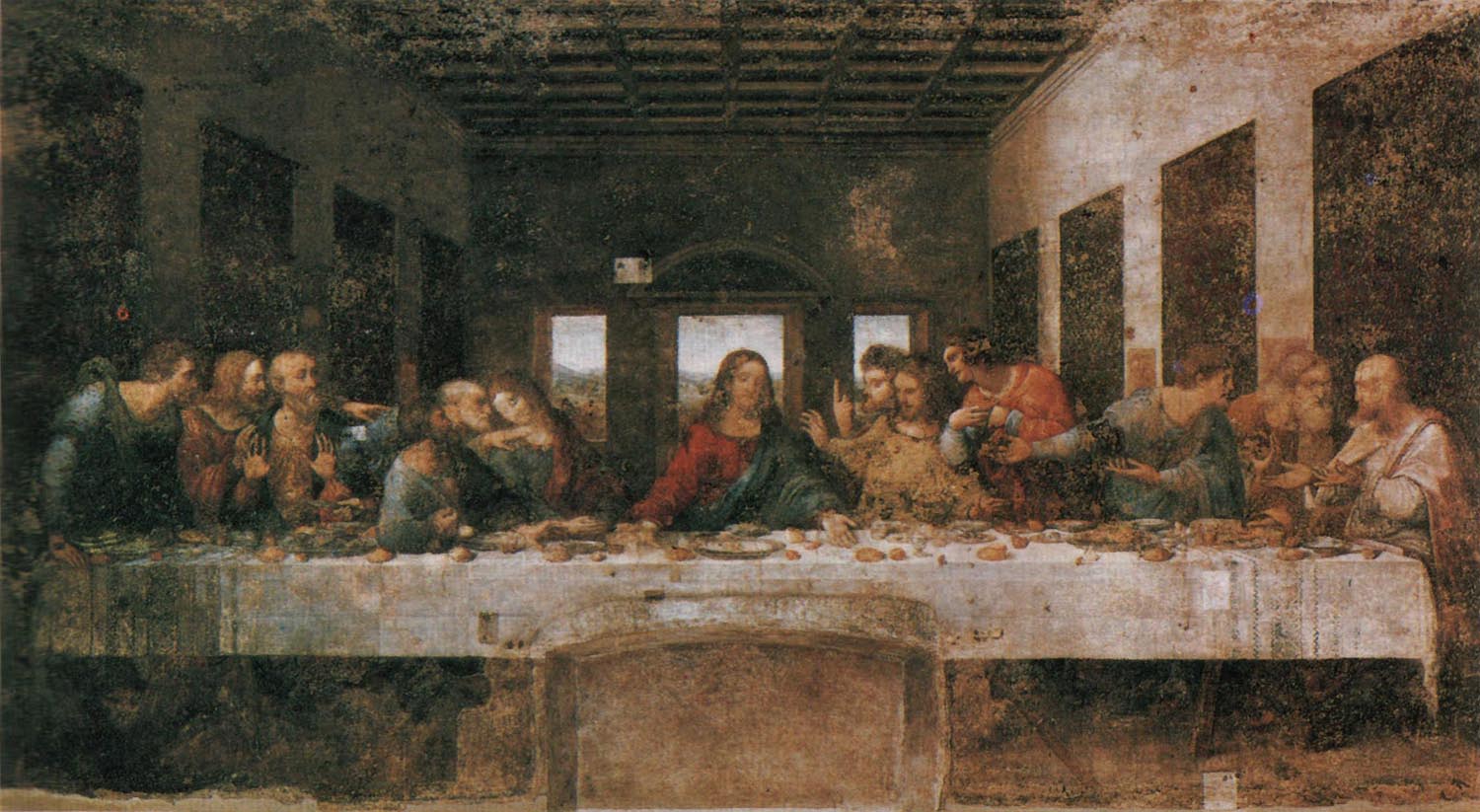
    The Last Supper ( Role Play Script)


    The Last Supper

    Matthew 26:17-30

    Disciple 1:  “Where should we make preparations for the Passover?”

    Jesus:  “Go into the city and find a certain man and tell him, “It is nearly time, I am going to celebrate the Passover with my disciples at your house.”

    Narrator: So the disciples did as Jesus told them and prepared the Passover.

    That Night, Jesus was sitting at the table with the twelve disciples.

    Jesus: “Truly I tell you, one of you will betray me.”

    Disciple 2: “Surely you don’t mean me, Lord?”

    Jesus: “The one who has dipped his hand into the bowl with me will betray me.  The Son of Man will go just as it is written about him. But woe to that man who betrays the Son of Man! It would be better if he had not been born.”

    Narrator: Judas Said

    Judas: “Surely you don’t mean me, leader?”

    Jesus: “You have said so.”

    Narrator: While they were eating, Jesus took bread, and when he had given thanks, he broke it and gave it to his disciples

    Jesus: “Take and eat; this is my body.”

    Narrator: Then he took a cup, and when he had given thanks, he gave it to them.

    Jesus: “Drink from it, all of you. This is my blood of the promise, which is poured out for many for the forgiveness of sins. I tell you, I will not drink from this fruit of the vine, until that day when I drink it with you in my Father’s kingdom.”

    Narrator: When they had sung a hymn, they went out to the Mount of Olives.